
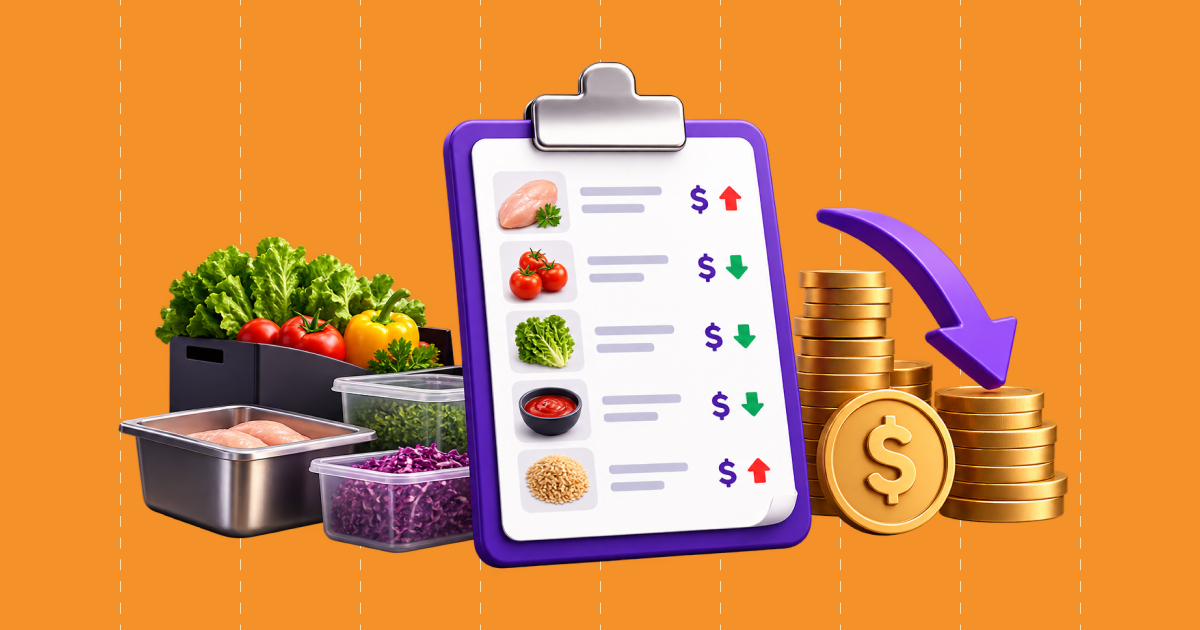
A delivery kitchen can look busy while losing money on every order. High order volume does not correct an uncontrolled food cost percentage, especially once aggregator commissions, packaging, promotions, refunds, and labor are included. The top food cost controls give founders and operators a practical way to protect contribution margin without compromising the guest experience.
For UAE delivery brands, food cost control is not a one-time menu exercise. It is an operating discipline that begins before launch and continues through purchasing, prep, portioning, menu engineering, and daily stock checks. The goal is not simply to buy cheaper ingredients. It is to produce the same quality item, at the intended margin, every time it leaves the kitchen.
A menu price built from a rough ingredient estimate is not a commercial plan. Every sellable item needs a recipe card that captures ingredient quantities, purchase units, yield loss, garnish, sauces, cooking oil where material, and delivery packaging.
The distinction between purchase cost and usable cost matters. A kilogram of raw chicken is not a kilogram of cooked, trimmed chicken. If trimming and cooking reduce usable yield to 72%, the cost per usable kilogram is materially higher than the invoice price. The same issue applies to produce, seafood, bones, frying oil, and items with short shelf lives.
Build costing from the actual supplier pack size and current invoice cost. Then calculate the theoretical food cost for one portion:
Portion food cost / menu selling price x 100 = food cost percentage
A 28% food cost can be commercially healthy for one concept and insufficient for another. It depends on commission structure, rental model, discount reliance, labor, packaging, and average order value. Delivery-first operators should assess contribution margin per order, not food cost in isolation.
Recipe cards also create accountability. The kitchen team knows what “one portion” means, procurement knows the approved specification, and the operator can identify whether a margin issue comes from buying, production, or pricing.
Supplier invoices are one of the fastest places for margin to drift. A small increase across proteins, dairy, cooking oil, or imported items can quietly change the economics of an entire menu. Waiting for a monthly profit and loss review is too late.
Set approved supplier specifications for core ingredients. A specification should state the product, grade, pack size, target price range, acceptable substitutes, and required delivery condition. “Chicken breast” is not a usable specification. Fresh versus frozen, trim level, piece weight, halal documentation, origin, and pack format all affect food cost and kitchen output.
Review invoice variances weekly for high-value and high-volume items. The priority list will usually include proteins, cheese, cooking oil, rice, specialty sauces, packaging, and core produce. If the purchase cost rises, make a controlled decision: renegotiate, change supplier, adjust the recipe, revise the selling price, or accept a lower margin for a defined period. Do not allow silent substitutions to reach production.
For early-stage brands, avoid overbuying in pursuit of a marginally better unit price. Cash tied up in slow-moving inventory, spoilage, and inconsistent storage usually costs more than the saving. Purchase frequency should match sales velocity, shelf life, storage capacity, and supplier reliability.
A perfectly costed recipe is meaningless if the line cooks by instinct. Portion creep is common in delivery kitchens because teams want to avoid complaints, orders are produced under time pressure, and visual portions can vary widely between staff members.
Use scales, ladles, scoops, portion bags, standardized cups, and pre-portioned protein wherever they reduce variation. These are low-cost controls with immediate impact. A 15-gram over-portion on a high-cost protein may seem minor, but multiplied by hundreds of weekly orders, it can remove the profit from a menu item.
Prep should be organized around production batches and expected demand. For example, marinate and portion chicken based on forecasted daypart volume rather than preparing large quantities because staff have time in the morning. This reduces spoilage and keeps the kitchen flexible when platform demand changes.
Train against both under-portioning and over-portioning. Under-portioning can create refund requests, poor ratings, and lower repeat orders. The correct control is consistency, not indiscriminate cost cutting.
Yield testing converts assumptions into operating facts. Weigh an ingredient before trimming, preparation, and cooking, then weigh the usable output. Record the result and repeat it when suppliers, pack sizes, or kitchen methods change.
This is particularly valuable for proteins, fresh produce, and fried products. If a new supplier delivers a fattier cut of meat or smaller vegetables with more trim loss, the recipe may no longer meet target cost even if the invoice price is unchanged.
Not every popular dish is suitable for a delivery-first model. Some items require expensive ingredients, excessive customization, fragile presentation, or a long production time that affects throughput. Strong delivery menus balance demand with operational reliability and contribution margin.
Start by separating menu items into four practical groups: high-margin bestsellers, high-margin low-volume items, low-margin bestsellers, and low-margin low-volume items. High-margin bestsellers should receive prominent placement and reliable stock availability. Low-margin bestsellers need immediate review because their volume magnifies the problem. They may need a recipe adjustment, an add-on strategy, a price correction, or a supplier review.
Low-margin, low-volume items are often candidates for removal. Keeping them can increase inventory complexity, waste, training time, and ticket errors without producing meaningful revenue. A shorter menu with shared ingredients and clear production logic is often more profitable than a broad menu built to satisfy every possible preference.
Price decisions should account for platform commissions and promotional funding. A menu price that works for direct pickup may not work on an aggregator channel. This does not always mean raising every price. It may mean creating platform-specific bundles, adjusting add-on pricing, setting minimum basket thresholds where available, or focusing promotions on items with enough margin to absorb them.
Monthly stock counts are useful for accounting, but they are too slow as the primary operating control for a high-volume delivery kitchen. Core products should be counted daily or several times per week, depending on volume and risk. Full inventory counts can remain weekly, with a disciplined monthly reconciliation.
The key measure is variance between theoretical usage and actual usage. Theoretical usage is what the kitchen should have consumed based on sales and recipe cards. Actual usage is what the inventory movement shows. The difference points to waste, over-portioning, unrecorded meals, production errors, receiving errors, theft, or inaccurate recipes.
A practical control routine includes these actions:
Waste records should not become paperwork that no one reviews. If fries are repeatedly discarded because batch sizes are too large, change the batch plan. If remakes are increasing during a specific daypart, review ticket flow, packaging, and staff deployment. Food cost control improves when operational causes are corrected, not when teams are merely told to waste less.
Aggregator performance and food cost are connected more closely than many operators assume. Poor ratings, inaccurate preparation times, missing items, and frequent refunds all create cost pressure. A refund does not only remove revenue. It can also mean lost food, replacement production, platform penalties, lower visibility, and weaker repeat-order behavior.
Track item-level complaints alongside food cost data. A low-cost packaging choice may lead to soggy food and refund requests. Reducing a sauce portion may save money but weaken perceived value. Conversely, improving packaging or adjusting a recipe can protect ratings and create a better commercial result, even if the direct food cost increases slightly.
Controlled improvement cycles are more effective than broad changes. Test one adjustment, measure its impact on cost, ratings, refund rate, prep time, and order conversion, then decide whether to standardize it. This is especially relevant when optimizing virtual brands from an existing restaurant kitchen, where shared inventory can create both savings and confusion without clear controls.
Food cost improves when each control has a named owner. Procurement should own supplier compliance and invoice variance. The kitchen manager should own recipes, yields, portioning, and waste. Operations should own inventory discipline and corrective action. Commercial leadership should own menu pricing, promotion approval, and channel profitability.
For founders, the most useful weekly review is not a long report. It is a decision-ready view of food cost percentage, top ingredient variances, waste value, inventory variance, menu item contribution, refund trends, and actions due. FoodWork applies this operating logic across launch planning and managed kitchen performance because margin protection requires coordination between commercial decisions and daily execution.
The right food cost system should make decisions faster, not add administration for its own sake. Start with the items that carry the most spend and risk, enforce the controls consistently, and use the results to build a menu that can grow without giving away its margin.

Get clarity before you commit capital.

+971 52 288 5400
2101, Court Tower, Business Bay, Dubai UAE
hello@foodwork.ae
© 2026 FoodWork. All rights reserved
