
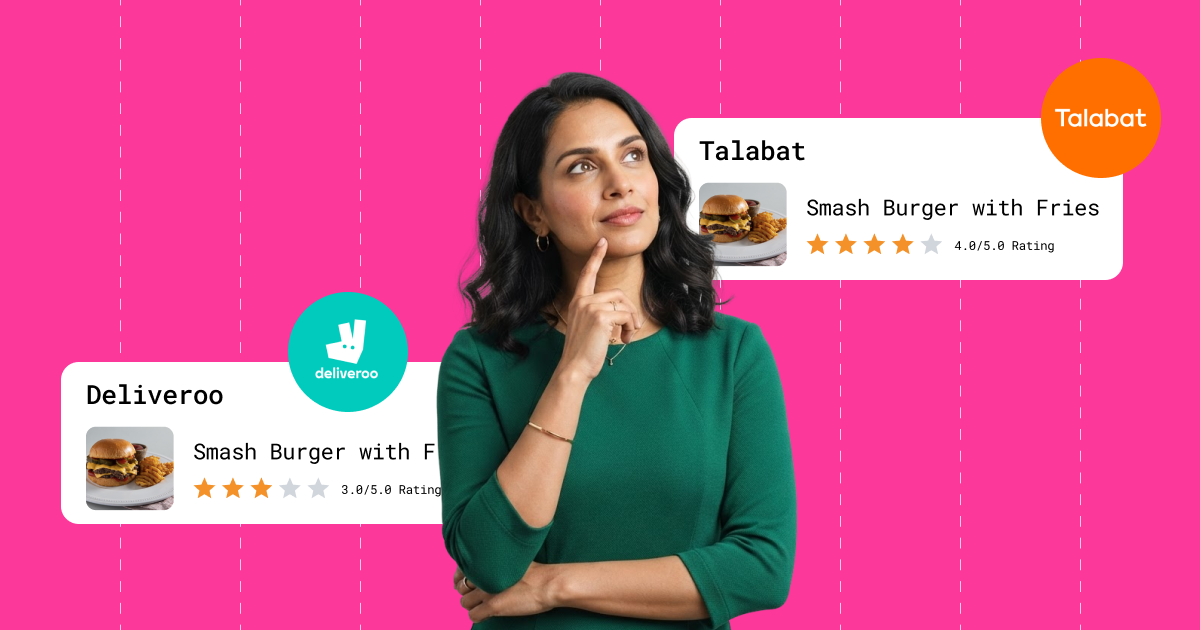
How to audit marketplace listings starts with the customer journey, not the dashboard. Work through search results, listing page, menu, item pages and checkout exactly as a customer would, and record every point where a competitor looks clearer, faster or better value.
A delivery brand can have a capable kitchen, good food, and the right location yet still underperform because its marketplace listing is working against it. Knowing how to audit marketplace listings turns vague concerns about low orders into a controlled review of visibility, conversion, customer experience, and margin. For UAE operators, this matters because the listing is often the customer’s first interaction with the brand – and the aggregator’s data is often the clearest signal of where revenue is being lost.
Do not begin by changing photos or rewriting menu descriptions. First, establish what the listing is producing today. Review each brand separately, on each delivery platform, over a consistent 28- or 30-day period. A listing can perform well on one marketplace and poorly on another because of different customer demographics, ranking logic, delivery zones, promotions, or competitor density.
Record total sales, order count, average order value, conversion rate where available, impressions or menu views, acceptance rate, cancellation rate, preparation time, customer rating, and ad spend. Then compare the current period with the prior period rather than relying on a single snapshot. A lower order count may be a visibility problem, but it may also be caused by reduced operating hours, stockouts, poor delivery coverage, or a decline in rating.
The purpose of this baseline is to separate symptoms from causes. High menu views with weak order conversion point toward pricing, menu design, images, or customer trust. Low impressions suggest a visibility issue tied to ranking, availability, ads, location, or marketplace competitiveness. Strong sales with poor contribution margin create a different problem entirely: revenue is arriving, but the listing is not commercially controlled.
A useful audit follows the same path as a customer. Search for the category, discover the brand, enter the menu, select items, check out, receive the order, and decide whether to order again. Each stage has a measurable job. If the listing fails at any point, the platform has less reason to show it and customers have less reason to convert.
Search the marketplace using the terms customers actually use: burger, healthy bowls, Indian, breakfast, late-night food, or the relevant cuisine and occasion. Review results during your key trading periods, not only during a quiet afternoon. A listing that appears near the top at 3 p.m. may disappear during the dinner rush when competition, sponsored placements, and service-time pressure increase.
Assess whether the brand name communicates the food category. A creative virtual-brand name can be memorable, but it should not make the offer unclear. Customers should understand what is sold before opening the listing. Category selection, cuisine tags, search terms, and collection placement must also match the menu. A shawarma-led brand tagged broadly as Middle Eastern may lose visibility to more specifically categorized competitors.
Check the trading radius and delivery estimate. Excessively wide coverage can increase exposure but create slower delivery times, weaker food quality, and lower ratings. A smaller, profitable radius may deliver better conversion and repeat behavior. The right setting depends on cuisine, packaging, kitchen capacity, and local demand density.
Marketplace algorithms favor listings that can consistently fulfill orders. Audit scheduled hours against actual kitchen readiness. If the brand is online while key products are unavailable, staff are delayed, or the kitchen cannot maintain prep times, the listing may collect operational penalties that reduce future visibility.
Review item availability by daypart. A menu with frequent stockouts creates a poor customer experience even when the overall store remains open. Identify the items customers search for, add to cart, and order most often. These need dependable inventory, clear modifiers, and a production process that works at peak volume.
Also examine rejected orders, canceled orders, excessive preparation times, and temporary closures. These are not isolated operations issues. They are marketplace-performance issues with direct consequences for sales and ranking.
A marketplace menu is not a printed restaurant menu. It needs to help a customer make a confident choice quickly on a small screen. Long menus with repeated items, unclear sections, and inconsistent naming can lower conversion even when the food itself is strong.
Start with menu structure. Put high-demand categories first, group products by how customers shop, and make best-selling items easy to find. Use item names that identify the product, key format, and flavor without unnecessary language. “Crispy Chicken Burger” is clearer than a branded name that gives no indication of what the customer will receive.
Descriptions should answer practical questions: what is included, how large is it, what makes it different, and whether it contains a key dietary or spice consideration. Keep them concise. Customers do not need a story about every ingredient, but they do need enough information to avoid uncertainty.
Review modifier logic closely. Required choices should be essential, options should be easy to understand, and upsells should add genuine value. Too many forced selections slow checkout. Too few can lead to inaccurate orders and complaints. For example, a meal should clearly state whether fries and a drink are included, while extra sauces and premium sides can be offered as optional additions.
Use sales data to identify products that generate orders but damage kitchen flow or margin. A popular item is not automatically a hero item if it causes slow preparation, high refunds, or frequent quality complaints. Equally, a low-selling item may deserve removal if it adds inventory complexity without supporting a clear menu role.
Pricing audits should not stop at competitor screenshots. A lower price may improve clicks, but it can reduce contribution margin or create an expectation the business cannot sustain. A higher price may be justified by portion size, quality, packaging, or brand positioning, but only if the listing communicates that value clearly.
Calculate the net economics for representative orders after marketplace commission, taxes, payment charges where applicable, discounts, ad spend, packaging, food cost, and direct labor. Then test the impact of common customer behavior: a single main item, a meal bundle, a family order, and an order placed with a discount.
Look for pricing gaps within the menu. If a combo provides little perceived saving, customers may choose only the main item and average order value will stall. If a promotion makes a best-seller unprofitable, it is not a growth mechanism. It is a controlled loss. Promotions should have a defined objective, such as first-order acquisition, reactivation, or demand generation during a weak daypart, and should be measured against incremental revenue rather than total sales.
Images influence conversion, but consistency matters more than visual decoration. Check that hero images accurately represent portion size, packaging, and the final delivered product. Poor lighting, inconsistent backgrounds, duplicate photos, and images that do not match the item name create hesitation. The first few images in high-traffic categories deserve the strongest attention because they carry disproportionate commercial weight.
Ratings require a deeper review than the headline score. Read recent low-star feedback and group it by cause: food quality, missing items, temperature, portion size, packaging, rider delay, or unclear expectations. The pattern tells you whether the fix belongs in the recipe, packing station, dispatch process, menu description, or service radius.
Do not attempt rating recovery through generic responses alone. If customers regularly mention soggy fries or missing dips, the response is operational: change packaging, revise the packing checklist, or alter the menu setup. A rating recovery plan needs an owner, a deadline, and a measurement period. Otherwise, the same issues return at the next peak period.
Competitive review is useful when it leads to a decision. Select a small set of direct competitors in the same delivery zone and compare their ranking, price points, menu size, bundles, rating, imagery, promotions, and stated delivery times. Do not copy their entire approach. A competitor may be using aggressive discounting that is financially unsound, or running a menu designed for a different kitchen model.
Instead, look for gaps. Perhaps the category has no strong premium option, no clear family bundle, weak late-night availability, or poor dietary labeling. The most valuable competitive finding is one that your kitchen can execute consistently and profitably.
An audit only creates value when it becomes a prioritized operating plan. Avoid changing every element at once. If sales rise or fall afterward, you will not know which change caused the result. Work in controlled cycles, beginning with issues that affect both customer experience and marketplace performance.
A practical priority order is usually availability and fulfillment reliability first, then menu clarity and conversion, then pricing and bundles, followed by visibility tools such as sponsored placements or promotions. The order can change if the data reveals a clear exception. A highly visible listing with poor conversion needs menu and value corrections before more advertising. A high-converting listing with low impressions may justify a visibility investment after operational readiness is confirmed.
Assign each action to a specific owner and review results weekly. Track the leading metric linked to the change: availability for stock-control fixes, conversion for menu edits, average order value for bundles, or rating trends for packaging improvements. Give changes enough time to generate meaningful data, while acting quickly on operational failures that affect live orders.
For founders managing multiple brands or locations, use one audit framework across all listings but do not force identical decisions. A virtual brand operating from unused kitchen capacity may need a narrower menu and tighter delivery radius than an established restaurant brand. The objective is not visual consistency for its own sake. It is profitable, reliable performance at the marketplace level.
FoodWork approaches listing audits as part of revenue-focused execution, connecting marketplace data to kitchen capability, menu economics, and customer feedback. The useful question is never simply, “How can this listing look better?” It is, “What change will improve customer choice, operational control, and profitable orders at the same time?” Start there, test one meaningful improvement, and let the next decision be guided by the result.
Score each point as working, weak or broken, then sequence fixes by effort against revenue impact. Availability and preparation time come first because they cost nothing to fix and feed platform visibility. Photography and descriptions follow, since they lift conversion on traffic you already receive. Pricing and promotions come last, once the listing converts properly.
Repeat the audit monthly for the first quarter, then quarterly. Listings decay: items go out of stock, photos age, competitors add offers, and small gaps compound into lost ranking.
Pick three competitors in your area and price band. Compare hero imagery, menu depth, item photography coverage, review volume, rating, promotion type and the delivery time shown to the customer. The gap that appears in all three comparisons is usually where your orders are going.
Platform partner guidance from Talabat and other aggregators sets out listing standards worth auditing against, and our menu engineering service rebuilds the menu once the audit shows what is losing conversion.
Monthly during the first quarter after launch or after any major change, then quarterly. Availability and preparation time should be checked weekly regardless.
Availability discipline. Items marked unavailable during peak cost orders directly and damage the signals that decide how often your listing is shown.
Yes. Item photography is one of the strongest conversion levers on a delivery listing, especially for high-contribution items competing with cheaper alternatives.
Prioritise top sellers and the highest contribution items. A partial set of excellent photos beats a full set of weak ones.
Read the last 50 reviews and group them into themes such as temperature, missing items, packaging and portion. Fix the top two themes before asking for more reviews.
The menu can be consistent, but pricing, promotions and preparation times should reflect each platform’s economics and customer base.
Ask our growth services team for a listing audit, or check what low ratings have cost with the rating recovery calculator.

Get clarity before you commit capital.

+971 52 288 5400
2101, Court Tower, Business Bay, Dubai UAE
hello@foodwork.ae
© 2026 FoodWork. All rights reserved
