
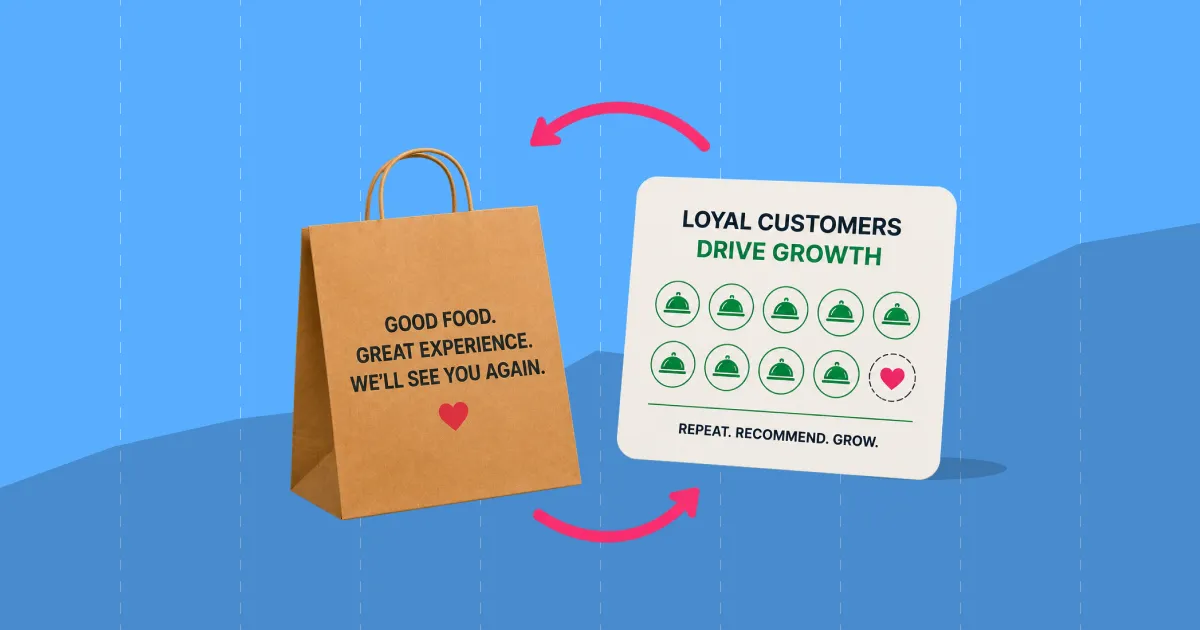
A customer who orders once is not proof of a viable delivery business. A customer who returns, orders a higher-value basket, and recommends the brand is. To increase restaurant repeat orders, operators need to manage the full customer experience: the promise made on the delivery platform, the food that arrives, the value the customer perceives, and the reason to choose the brand again.
For UAE delivery brands, repeat purchase is often where growth becomes commercially stable. Acquisition through aggregator visibility, sponsored placements, and launch offers can create early volume. But if the first order is late, incomplete, poorly packed, or inconsistent with the menu image, that acquisition spend produces a one-time transaction rather than a customer base.
Repeat orders are won in the first delivery. The customer may have selected the brand because of a photo, a discount, a high ranking, or a specific craving. They return only when the delivered product confirms that decision.
Start by mapping the first-order journey from the marketplace listing to the moment the customer opens the bag. Check whether menu names are clear, photos set an accurate expectation, modifiers work correctly, and stated preparation times reflect actual kitchen capacity. A popular item that consistently misses its estimated delivery window is not a growth asset. It is a source of avoidable dissatisfaction.
The handoff matters as much as cooking. Every order should leave with the correct items, clearly marked packaging, appropriate seals, and food that can survive travel time. This is especially relevant in high-temperature UAE conditions, where cold beverages, fried items, sauces, and delicate desserts can deteriorate quickly. Test finished dishes after realistic delivery intervals, not only at the pass.
A practical control is a short dispatch checklist owned by the expeditor or shift lead. It should verify order number, items, modifiers, condiments, cutlery when requested, tamper evidence, and package condition. The objective is not more paperwork. It is preventing a missing side, wrong drink, or leaked sauce from becoming the customer’s lasting memory of the brand.
A menu can attract first-time orders and still be poorly designed for retention. Very large menus create decision fatigue, increase operational errors, and make stock management harder. A narrow menu with no variation can make the brand easy to forget after one purchase. The right balance depends on cuisine, daypart, kitchen capacity, and the target customer’s ordering frequency.
Analyze repeat behavior by item, not only by total sales. Look for dishes that appear in second and third orders, combinations that lift basket value, and products that generate complaints despite strong first-order conversion. This reveals the difference between a high-click item and a dependable retention item.
Build around a small group of core products that travel well and can be produced consistently. Then create controlled reasons to return: rotating limited items, add-ons that complement the main meal, family bundles, office lunch combinations, or daypart-specific offers. These should fit the existing production line. Adding complexity that slows the kitchen or compromises quality will cost more repeat demand than the promotion creates.
Portion value also deserves attention. Customers do not judge value only by price. They compare filling level, ingredient quality, presentation, temperature, packaging, and whether the order feels complete. If a guest repeatedly feels they need to pay extra for basic components, the brand may still convert on discounts but struggle to build loyalty.
Aggressive discounts can fill a new kitchen’s order queue, but they can also train customers to wait for the next offer. Use promotions with a defined commercial purpose: driving a first trial, reactivating a lapsed customer, supporting a quieter daypart, or introducing a higher-margin bundle.
The better retention question is not, “What discount should we offer?” It is, “What will make the next order feel like an obvious choice?” That may be a strong bundle, a reliably generous portion, a relevant add-on, or a menu item that solves a recurring lunch or dinner need. A discount should support that value proposition, not substitute for it.
A low rating is often viewed as a marketplace visibility problem. It is also a repeat-order problem. Customers who experience weak quality may not leave a review at all; they may simply not return. Review patterns help operators identify which part of the operation is weakening retention before the issue becomes more expensive.
Separate feedback into operational categories: late delivery, food temperature, missing items, portion concerns, taste, packaging, and customer service. Then compare those categories against shift patterns, kitchen staffing, item mix, and aggregator timing. A complaint about cold food at dinner may be caused by a packaging failure, but it may also point to prep batching, delayed rider assignment, or a dispatch bottleneck.
The response must be controlled. Recover individual customers where the platform process allows, but do not rely on apology messages as the solution. Assign an owner, define the correction, and measure whether the issue declines over the next operating period. If missing items rise when volume increases, retraining is only part of the answer. The packing station may need a clearer layout, printed order tickets, or a final verification step.
FoodWork approaches rating recovery as an operating discipline rather than a cosmetic exercise. The strongest improvement comes when listing quality, kitchen workflow, packaging standards, and customer feedback are managed together.
Delivery platforms provide useful signals, but the data needs interpretation. Sales alone can hide a weak retention model. Track first-time versus returning customers, repeat rate by cohort, average order value, cancellation rate, refund reasons, ratings, preparation time, and availability by item and daypart.
Review these metrics in a fixed weekly operating cycle. A weekly view is usually frequent enough to act without overreacting to one difficult shift. Look at the full funnel. If impressions are high but orders are weak, the listing, pricing, imagery, or offer may be the issue. If conversion is strong but repeat behavior is low, the delivered experience deserves closer scrutiny. If repeat orders are healthy but revenue is flat, menu engineering and basket-building may be the next priority.
Cohort tracking is particularly useful. Compare customers acquired in one month with customers acquired in the next. If the newer cohort has lower second-order conversion, ask what changed: platform ranking, delivery zone, pricing, packaging, menu mix, kitchen team, or a new promotion. This creates decision-ready evidence instead of assumptions.
The kitchen cannot carry retention alone. Marketplace listings need accurate availability, compelling imagery, well-structured categories, and menu descriptions that reduce uncertainty. An unavailable signature dish or inconsistent opening hours can break customer habits quickly, particularly for office and family customers who reorder based on routine.
Customer communication should be useful and proportionate. If the platform supports order updates, respond quickly to problems and provide clear resolution. For direct-order channels, obtain consent and use customer data responsibly. A relevant reactivation offer after a meaningful gap can work; frequent generic messages can damage trust.
Retention also improves when brands define their customer occasions. A late-night comfort-food brand should not communicate like a weekday office-lunch brand. A premium healthy bowl concept may win repeat customers through consistency and customization, while a value-led family brand may win through predictable bundles and reliable portions. One retention playbook does not fit every virtual brand or restaurant format.
The fastest way to lose control is changing the menu, pricing, offers, photos, and packaging at the same time. When results move, no one knows why. Instead, run controlled improvement cycles with one clear hypothesis.
For example, test whether a new insulated package reduces cold-food complaints on a specific product group. Or test whether a lunch bundle raises second-order conversion among weekday customers. Define the metric, test window, responsible owner, and expected commercial outcome before launch. Keep what works, correct what does not, and document the operating standard.
This discipline is particularly valuable for cloud kitchens and virtual brands, where small changes can affect multiple concepts sharing the same staff, equipment, and dispatch area. Growth should not create operational confusion.
The next repeat order is earned before the customer opens the app again. Build a dependable first delivery, protect quality at dispatch, make value clear, and let performance data direct each improvement. That is how a delivery brand moves from intermittent transactions to predictable demand.

Get clarity before you commit capital.

+971 52 288 5400
2101, Court Tower, Business Bay, Dubai UAE
hello@foodwork.ae
© 2026 FoodWork. All rights reserved
