
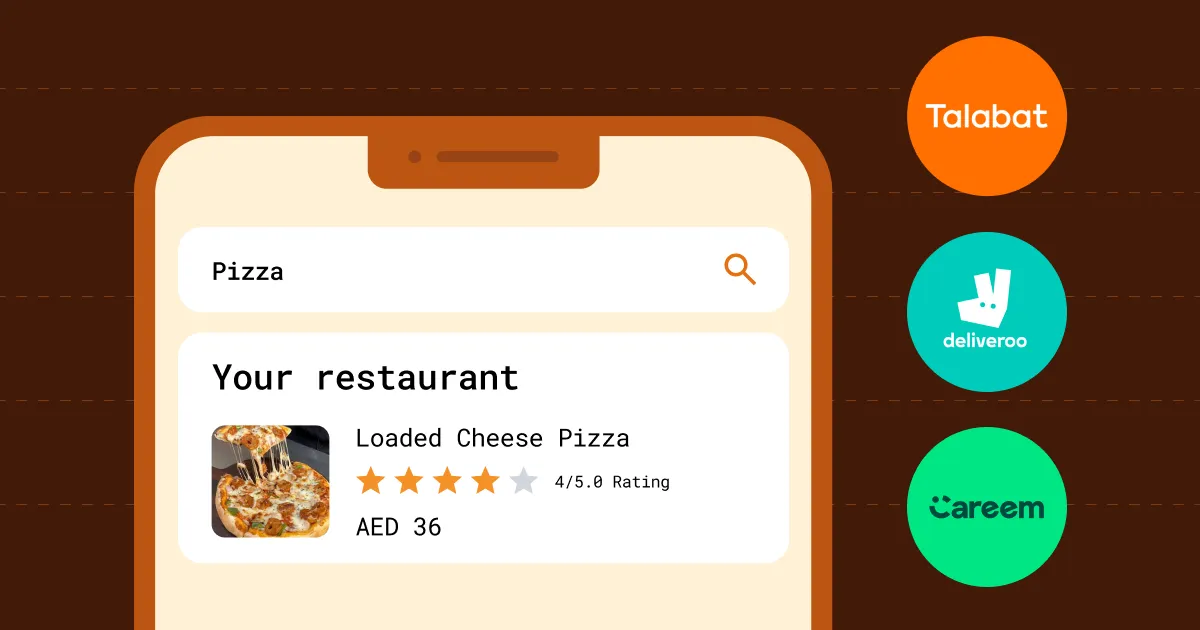
If you operate on Talabat, Deliveroo, Careem, or Noon, your rating isn’t just a number, it’s your digital storefront. On delivery platforms your customers don’t walk past your outlet, they scan listings, compare ratings with several other similar cloud kitchens and make decisions in seconds.
A difference between 4.6 and 4.1 can mean:
Most restaurant owners assume low ratings are a “review problem” but in reality, they’re usually an operations and customer experience problem. Based on our work with UAE-based delivery-first brands we have analyzed, we have seen that even small rating drops create measurable order decline, especially during peak hours when customers are in a rush to order and they will go with the highest rated brand filter by top-rated outlets.
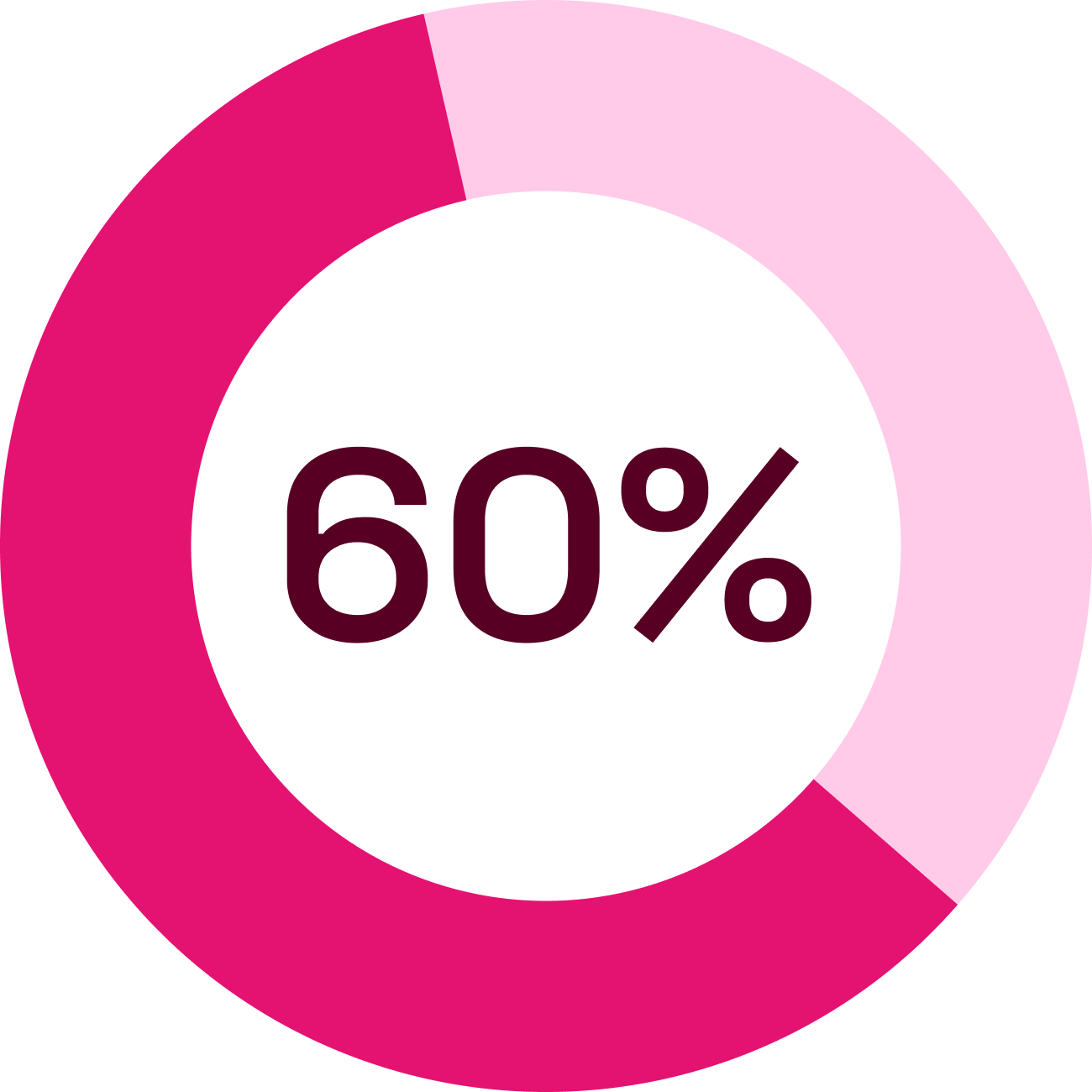
Your rating influences whether customers click, order, and return. On competitive platforms, even a 0.3–0.5 drop can reduce order velocity.
Most restaurants don’t lose ratings overnight. The decline usually happens gradually like one delayed order during peak hours, one leaking package, one missing item, one frustrated customer who decides to leave a public review instead of contacting support – all this snowballs into a negative rating mindset in the customer.
On delivery platforms like Talabat, Deliveroo, Careem, and Noon, customers don’t experience your restaurant physically because their entire perception is shaped by delivery speed, packaging condition, food consistency, and how complaints are handled. When any of these break repeatedly your ratings begin to slip causing a negative impact on your brand.
From our experience working with delivery-first brands in the UAE, negative reviews typically cluster around operational patterns rather than random incidents. The most common recurring triggers include:
When these issues repeat, even at a small scale, the algorithm reflects it. Ratings decline, visibility drops, and order volume begins to slow, often before operators fully realize what’s happening.
The challenge is not just getting new 5-star reviews. Instead, the real challenge is stopping the operational cause behind 1-2 star reviews.
One of the most misunderstood aspects of rating recovery is how review volume affects movement.
A restaurant rated 3.8 with 60 reviews can recover much faster than a restaurant rated 3.8 with 300 reviews. The reason is simple: delivery platforms use weighted averages. The more reviews you accumulate, the more new 5-star reviews are required to shift the overall score.
For example, two restaurants may both want to move from 3.8 to 4.6. The one with 60 reviews may need fewer than 80 new 5-star reviews. The one with 300 reviews could need several hundred.
This is why recovery becomes progressively slower if the underlying issues remain unfixed. Each new negative review offsets multiple positive ones. Without structural correction, the math works against you.
The takeaway is simple: rating recovery is both operational and mathematical. Fixing one without the other rarely produces lasting results.
For example, we consider a Starting Rating: 3.8 | Target Rating: 4.6
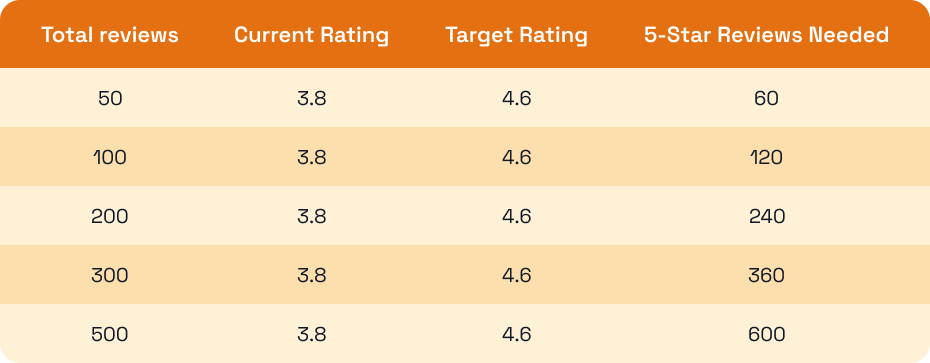
The higher your total review count, the more 5-star reviews are required to shift your rating. Recovery slows down as review volume increases — which is why operational fixes must happen alongside review generation.
A multi-cuisine cloud kitchen in Dubai approached FoodWork after noticing a steady decline in orders over two months. The team believed the issue was seasonal demand. The data told a different story. Their average rating had dropped from 4.2 to 3.7 within eight weeks.
At first glance, the decline seemed minor. In reality, it was enough to impact visibility and customer trust across delivery platforms. Review analysis revealed recurring complaints about late peak-hour dispatch, leaking packaging for gravy-based items, and inconsistent portion sizes.
We started by auditing peak-hour preparation flow and dispatch coordination. The average delay was reduced through minor but precise adjustments in station allocation and batching. Next, packaging was redesigned for specific menu categories that frequently appeared in negative reviews. Items that consistently underperformed in delivery were removed or reformulated.
Finally, once operational triggers were controlled, a structured post-order feedback system was introduced to increase positive review velocity.
Within 10 weeks:
Before FoodWork, we were constantly firefighting ratings, complaints, order drops. What changed wasn’t just the reviews, it was the system. Once the operations and packaging were fixed, the ratings started improving naturally, and orders became stable again. We finally felt in control.”

Improving ratings on Talabat, Deliveroo, Careem, and Noon is not about asking customers to leave better reviews, it’s about building a delivery operation that consistently earns them. FoodWork helps restaurants and cloud kitchens improve their Google reviews, Talabat ratings, Deliveroo ratings, and overall delivery performance through structured operational audits, menu optimization, packaging refinement, and systematic reputation management. When the customer experience improves, ratings improve sustainably.
We don’t promise overnight rating jumps or artificial boosts. We build a long-term restaurant rating recovery strategy for cloud kitchens in Dubai designed to increase visibility, improve conversion rates, and boost repeat orders. If your rating is below 4.5, you’re already competing at a disadvantage. If it’s below 4.0, revenue impact is likely happening right now. You’ve calculated the numbers, now it’s time to fix the system behind them.
Enter your current rating and review count, pick a target benchmark, then analyze.

+971 52 288 5400
2101, Court Tower, Business Bay, Dubai UAE
hello@foodwork.ae
© 2026 FoodWork. All rights reserved
